Shiatsu for Sciatica - Can It Help?
Updated: 2 hours ago
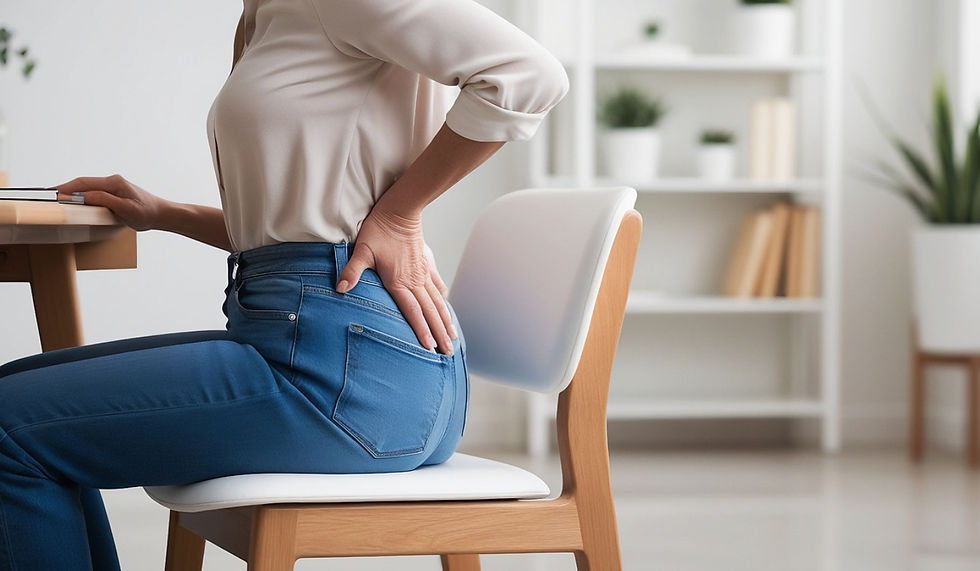
Sciatica can make everyday life difficult; sitting, walking, bending and even getting comfortable at night can become a challenge. If you've been experiencing pain that travels from your lower back or buttock down your leg, you may be wondering whether shiatsu could help.
Shiatsu is a Japanese bodywork therapy that uses comfortable pressure, stretches and other gentle techniques tailored to the individual. It can be used to support relaxation and ease muscle tension, which may contribute to discomfort around the back, hips and buttocks.
In this article, I'll explain how I approach sciatica in my Cheltenham shiatsu clinic, how Chinese medicine views the pathways involved, and what you should consider before trying bodywork for sciatic pain.
Can shiatsu help sciatica?
Shiatsu may help ease associated muscle tension and support comfort for some people experiencing sciatic pain. There can be several reasons why the sciatic nerve becomes irritated or compressed, so understanding the possible cause is important when deciding which approaches may be helpful. Where appropriate, shiatsu can complement medical care and other measures to help manage discomfort.
Sciatica describes pain caused by irritation or compression of the sciatic nerve.; which leads to inflammation and heat. This nerve travels from the lower back through the buttock and down the back of each leg, with branches continuing into the foot. Symptoms commonly affect one side and may include pain, tingling, numbness or weakness. The underlying cause can vary, so the symptoms alone don't tell us exactly what is happening. nhs.co.uk/sciatica
Chinese medicine and the meridians take this a step further and define two paths of sciatica - down the back middle of the leg (Bladder meridian) or down the side of your leg (Gallbladder meridian). Both have different causes which I'll look into today; plus Plantar Fasciitis may also be connected.

Why can shiatsu help with sciatica relief?
Shiatsu is founded on the same principles as acupuncture, a practice developed by the Chinese approximately 5000 years ago. They discovered methods to address health problems without surgery, recognising the significant connection between the mind and body, where psychological aspects are intertwined with physical health. They realised they could restore balance to a majority of "dis-ease" by using needles or finger pressure to access the body's energy points and also by employing gentle herbs to realign your Qi when imbalanced.
Shiatsu, a Japanese style of acupressure, has evolved to offer a profound insight into the body's interconnectedness and functioning. It comprehends how organs are connected to nerves and the central spinal column, as well as how emotions can influence and lead to problems that manifest in the spine.
Your sciatica may be associated with an acute health condition acknowledged by medical professionals, such as a compressed disc, or it might have resulted from a recent back muscle strain, an accident, or lifestyle factors that have caused sciatica to be present.
Sciatica can be a persistent symptom typically caused by another underlying issue, especially if it frequently recurs with periods of respite. Shiatsu is a therapy designed to alleviate tight muscles, which are often tense due to stress. We constantly carry a lot of emotional tension, and relief is sometimes felt when you're dealing with a cold or virus, as this can be a period of reduced tension in the body; due to a lack of energy to worry. Sciatica can persist or return, particularly when an underlying problem continues to irritate the nerve. Stress may also contribute to muscle tension and influence how we experience pain. In my shiatsu practice, I consider the whole person, including their movement patterns, physical tension, lifestyle and general wellbeing, rather than looking at the painful area in isolation.
What can cause sciatica?
To maintain an upright sitting and standing posture, it's essential for the muscles in the front and back to be strong and capable of supporting the spine. Many problems arise when muscles are unsupported, weak, overstretched, or tight. Your lifestyle significantly influences this, particularly if you spend most of your day sitting at a desk or in a car, followed by sudden bursts of exercise or DIY activities on the weekend. This can easily lead to minor injuries, as the muscles are unexpectedly engaged in activities they haven't performed in some time, without proper warm-up.
The lumbar vertebrae are surrounded by a network of complex muscles, such as the Quadratus Lumborum at the back, which can impact our ability to bend sideways when tight. At the front are the Abdominals, and extending through the pelvis into the thighs are the Hip Flexors or Psoas muscles. The Psoas is a robust muscle deeply situated in the pelvis, connecting through the groin to the thigh. This muscle can become tight and shortened due to prolonged sitting or driving, and addressing tension in this area may help relieve lower-back discomfort.
Weak abdominal muscles can place additional strain on the back muscles, causing them to tighten and reduce your flexibility. Muscles function in pairs, performing equal and opposite actions, which applies to one side being stronger or potentially tighter than the other. When experiencing back or hip issues with pain on one side, there is often a corresponding problem on the opposite side that needs attention. It's important to evaluate all muscles for their quality and tension. Pelvic twists are common, and a tendency to sit or lie assessingcross-legged may indicate this. Tension around the pelvis and gluteal muscles may contribute to discomfort in the hip and buttock region. During a shiatsu session, I assess how the body moves and responds to comfortable touch, adapting the treatment to the individual. This can help address associated muscle tension, and aim to provide relief.
Regular shiatsu sessions are advantageous because your body tends to revert to familiar muscle patterns, (even if they are incorrect) when you're under stress. We all have areas where we accumulate tension, leading the body to respond, and symptoms like sciatica can reappear. By consistently resetting these incorrect patterns back into balance, and reminding you and your body how to 'feel good', a new awareness is created. This allows you to learn how to self-release when you notice the old patterns becoming uncomfortable. Shiatsu retrains your mind and body to recognise when you feel good and when you feel off balance.
In Chinese Medicine, the temperature of the muscles, whether hot or cold, is a crucial factor. We often refer to concepts like Qi (Chi) and energy. When muscles are not in optimal condition, they can obstruct the flow of Qi, resulting in muscles becoming cold and flat. This impedes the energetics of blood flow and can cause a dull ache or a feeling of strain when you stand up or twist. Imagine a scenario similar to a "Frozen Shoulder," but occurring in your lower back and hip area.
Your muscles are looking for warmth and gentle touch to reset and release the affected ones, to encourage blood to flow freely again, for the body’s Qi to inhabit the tissues and bring your muscles back to working health again.

Which type of sciatica do you have?
Shiatsu can aid relief with both types of sciatica. There are two distinct types in Chinese medicine, and I could even include Plantar Fasciitis as a third type (as it originates from the same area in the gluteal muscles).
In the image above, you can follow the three Chinese energy meridians involved: the Bladder, Gallbladder, and the shiatsu specific Large Intestine extension. This extension is particularly useful as it precisely follows the path to the underside of the foot. These 3 meridians converge in a large point - Gallbladder 30; also known as the point you may have been told to massage with a tennis ball.
Most people have heard of sitting on a tennis ball and the magic point is GB30 (in the image above). This point (or ring of points) is where shiatsu taps into releasing muscles; which in turn releases tension around the sciatic nerve. It's common to see in practise that the place where I need to support you is not where the pain is. If pain is linked to tight muscles they are likely over compensating for weaker ones (on the opposite side).
Aiding the softer side first means the tighter side may then trust so that it can release thereafter; this is the intricacy of shiatsu.
If you do use a tennis ball avoid pressing directly on an area that reproduces shooting pain, tingling or numbness; stop if symptoms worsen. If you're unsure whether this technique is suitable for you, seek advice from an appropriately qualified healthcare professional.
If you're in doubt do not try this at home - book a shiatsu consultation to discuss whether a treatment may be appropriate for you
If you experience new bladder or bowel difficulties, numbness around the genitals or bottom, or severe or worsening weakness or numbness in both legs - these require emergency assessment. Also read the NHS guidelines for sciatica here.
The piriformis muscle, located beneath the gluteal muscles, can trap the sciatic nerve and cause pain to radiate down the side or back of your leg, or it may silently lead to intense pain under the foot, known as plantar fasciitis. Regardless of whether the pain appears in your knee or foot, the root cause may lie deep within the gluteal muscles, where the sciatic nerve becomes trapped and inflamed.
Sciatica is a symptom and not the cause; and you may have already sought out medical advise and imaging. If this route hasn't shown results then the cause may likely be muscular. I can determine this as part of the shiatsu session with 'listening' to how the gluteal and pelvic muscles are responding to touch. Releasing / stimulating muscles throughout to balance the hip/pelvis region may give you relief on the day. Moving forwards with treatments and suggested lifestyle changes can help you feel a regular relief from pain.
Shiatsu and sciatica pain relief
Sciatica can be a lot to do with your muscles, whether they are tense or out of alignment. If you've been told your sciatica is due to bone overgrowth in the sacral foramen, still try shiatsu as you never know what relief can be found once tight muscles are released.
Though shiatsu is thought of as mainly acupressure, it actually involves a lot of understanding how your muscles are working and picking up whether they are stuck, tight or weak. This is done with touch, rotations, gentle shaking and possibly slow stretching. Don't worry though if you do come in in pain, the first steps are to try and make you as comfortable as possible and help you find relief quickly. If you have initial inflammation the key is not to aggravate further and at a point in the following weeks assess the underlying possible cause and then strengthen the new alignment of muscles; releasing any tension that is possibly causing the issue.
Your body will be comfortable with it's old muscle memory patterns; my aim is to retrain your body to feel relief from a balanced form. Shiatsu can help you find a new way of coping with and releasing the tension that has caused this pain in the first place.
Shiatsu is based on the Chinese meridians and this really helps in understanding the possible root causes of sciatica. As I mentioned earlier we have two branches of sciatica based on the Gallbladder and Bladder meridians (and the Large Intestine extension). They follow distinct routes through your lower back, pelvis, sacrum, and down your legs, and they also have unique emotional associations.
Chinese medicine and the link to sciatic pain
If there doesn't appear to be a physical reason for sciatica then with Chinese medicine we look to whether there is a possible emotional trigger causing tension. The Gallbladder meridian sciatica could be caused by a bad twist, or tension due to holding onto some repressed anger The Bladder meridian sciatica, can be related to a crick in your back muscles, or maybe a fearful tension held in the lower back. My third type is associated to grief; I've seen this manifest as Plantar Fasciitis a year or so after losing a loved one; I've seen this in many clients.
If you have sciatica without a known medical cause it can we can still give relief through gentle physical therapy. It can though be beneficial to explore what can be causing this to keep happening as can be key to prevent it from happening again. The beauty of the Chinese medicine is understanding that the psychological and physical are absolutely entwined; you can feel very real pain that can have an emotional cause.
Shiatsu is aimed at longterm prevention, it's always best to come before an issue happens, but a lot of the time your first introduction to a therapy is because you have pain and you're looking for relief. Shiatsu supports deep relaxation, body awareness and wellbeing; in doing so the hope if for issues to not arise and improve your physical health and flexibility.

Can shiatsu help you manage sciatic pain?
Living with sciatic pain can be frustrating, particularly when it keeps returning or affects your everyday activities. Shiatsu offers a holistic approach to bodywork, considering muscle tension, movement and how you're feeling as a whole.
In my Cheltenham clinic, I tailor each treatment to the individual and work within what feels comfortable for them. Shiatsu isn't a substitute for appropriate medical assessment, but it may be a helpful complementary option for some people experiencing back, hip and leg discomfort.
If you'd like to explore whether shiatsu might be suitable for you, you're welcome to find out more about my treatments or get in touch before booking.
About Andrea at Shiatsu Bodyworks Cheltenham
Andrea is a qualified zen shiatsu and chinese medicine practitioner with over 20 years immersed in holistic therapies and the energetics of mind and body. Based in Cheltenham, UK she offers in house clinic and online shiatsu sessions to help people with midlife health issues and also offers online consultations as she is a menopause specialist too.


Comments